Food X-Ray Inspection Systems & Equipment Hire
Food x-ray inspection services and food inspection systems & equipment Hire for a wide range of food and packaging types.
Our food x-ray inspection equipment for packaged products is specifically designed for precise end-of-line quality control or raw materials inspection prior to further processing.
These, purpose built, specialised food x-ray inspection systems are highly effective at detecting the smallest contaminants and comply with all major food safety standards. These advanced inspection systems have the very latest technology which deliver significantly higher detection performance than standard food x-ray equipment – please try us if your equipment has failed to find the contaminant you are looking for.
Our range of x-ray food inspection services and equipment for hire is equipped to inspect the full range of food and packaging types and sizes – steel cans, glass containers, sachet products, sacks of ingredients up to 25kg and large cases cheese and meat products. As well as detecting metal, glass, stone and bone fragments, certain plastic and composite materials can also be detected such as seals and gaskets.
Complete Cases
Expert Staff

What can our food x-ray equipment detect?
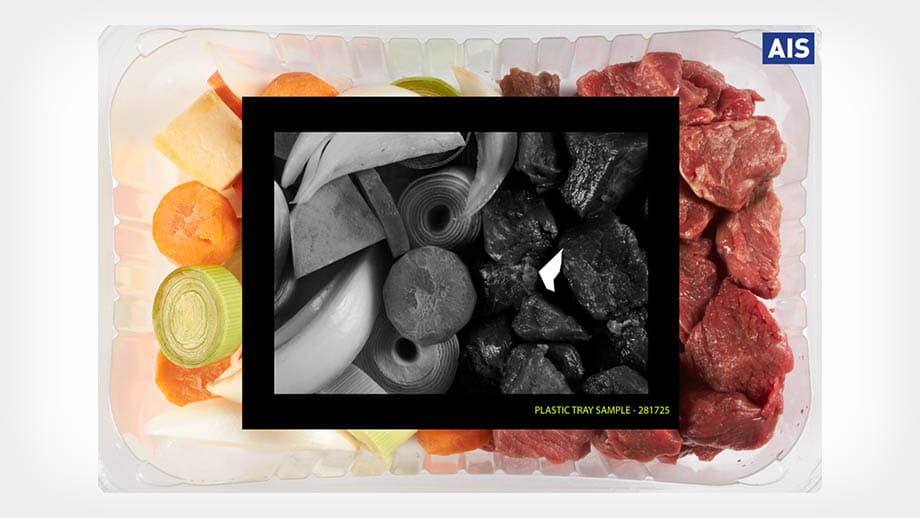
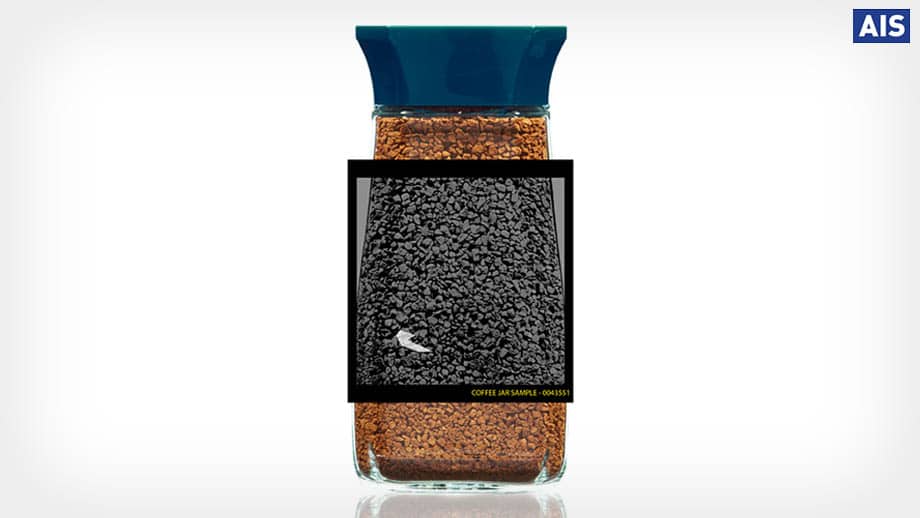
Our advanced x-ray food inspection equipment and technology can detect quality issues and foreign body contaminants within virtually any packaged food or drink items. X-ray food inspection systems can detect contaminations with metal, stones, glass, ceramics, and other similar materials.
Comprehensive detection
Identify defects without damaging goods
Global compliance support
Meets HACCP, TACCP, GFSI & GMP requirements
ISO 9001 certified
Accredited for our Quality Management System
Certified since 1999
Europe’s first ISO-certified X-ray inspection service
Why use food X-ray inspection systems for contaminant detection?
Product inspection systems are now an integral part of safe food production, as well as being a prerequisite of IFS certification. Contaminated products and resultant product recalls can have significant consequences for any food manufacturing business. Any subsequent brand damage can take a considerable amount of time and expenditure to recover.
Developments in x-ray technology with ultra high-resolution sensors and multi-energy technology can now detect contaminants of much smaller size and of lower density material in complex food matrices.
X-ray food inspection is the most valuable technique to use when you have a contamination problem.
What food types do we inspect?
Glass Packaging
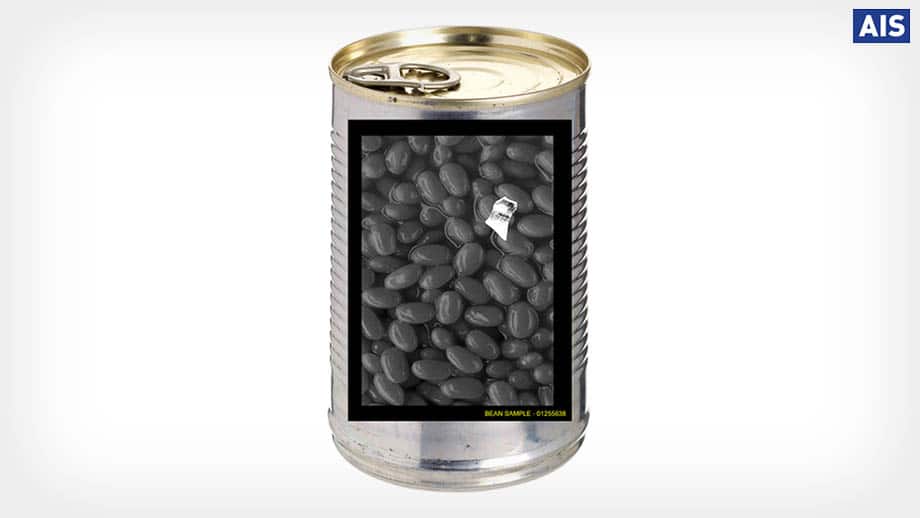
Canned Food
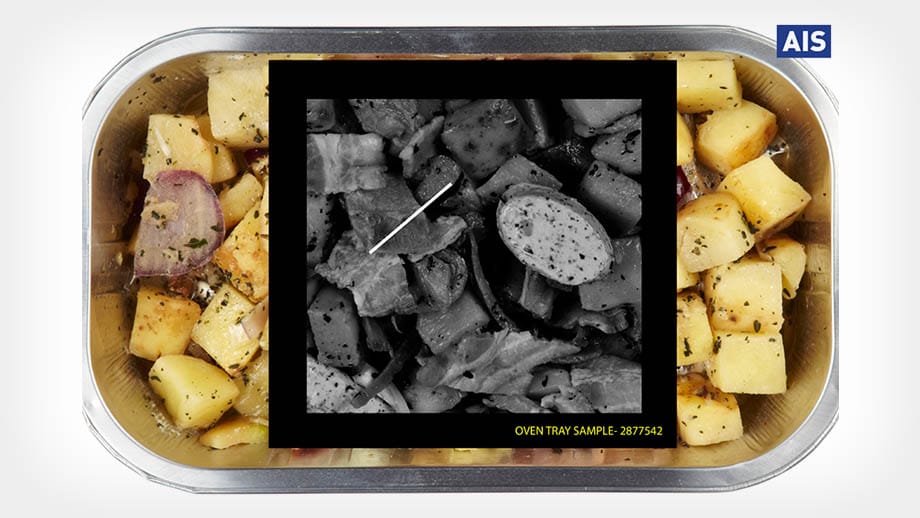
Foil & Composite Packaging

Bakery & Confectionery
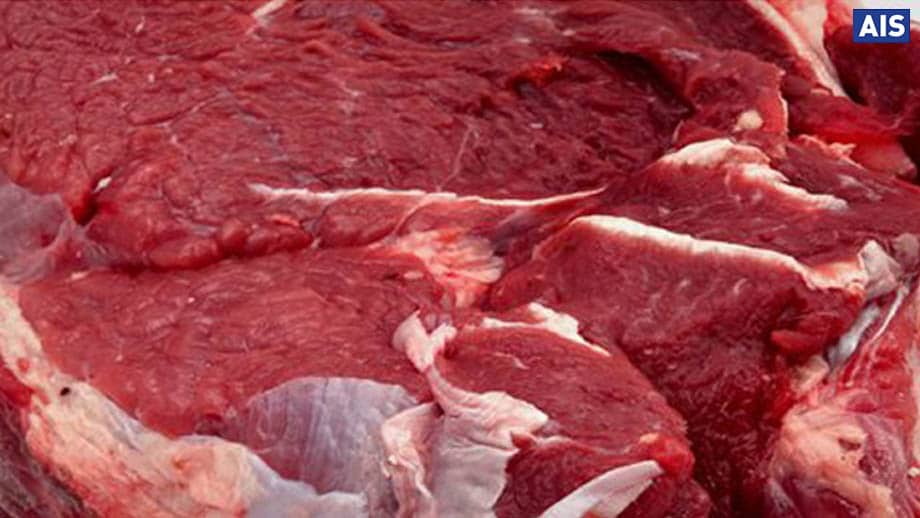
Meat Fat Analysis
How does an X-ray system work?
X-rays are a form of invisible electromagnetic energy with short wavelengths which most people are familiar with through its use in airport security and medical imaging. The interaction of x-rays passing through food products produces, because of the variable attenuation of the products components, a “shadow graph” of the internal structure. This allows the imaging of the internal structures of the food and internal features or contaminants within the food item under inspection. If the X-ray encounters a dense area in the food, such as a glass or metal contaminant, this will reduce the X-ray energy further.
The sub-millimetre x-ray sensor detects the x-ray beam and converts the x-ray into a “greyscale” image of the product and its contents. This image is then passed to the x-ray system processor which performs multiple simultaneous algorithms which are configured to the client’s foreign body detection limits.The x-ray system will reject the product and the system will store an image of this product in memory for the customer report.
Why choose our x-ray food inspection services?
Our food x-ray inspection services and systems are exceptionally reliable and highly customisable. We can x-ray food and FMCG in all shapes, sizes and forms of packaging – often without removing goods from the cases.
What’s more, our x-ray food inspection service is always fast, cost-effective and confidential. We will help put your goods back into distribution quickly and safely with no adverse effect on its quality or your brand integrity.
How do we ensure food safety and quality?
AIS’ high resolution x-ray inspection equipment can simultaneously perform accurate foreign body detection and identify common manufacturing faults.
When a batch needs to be urgently inspected, AIS will provide an immediate response and assessment. Our knowledgeable team is on hand to assess the suitability of your suspected problem, and manage a potential food recall should the need arise.
What are the benefits of a food x-ray inspection programme?
There is currently no legal requirement for food manufacturers to implement a food x-ray inspection programme, however the benefits will far outweigh the financial investment. The potential costs of failure involve product and packaging waste, damaged machinery and loss of output. The costs of an eventual product recall could easily escalate.
At AIS X-Ray, we also provide food x-ray inspection services for routine quality checks at a simple per-unit cost.
Food X-Ray Inspection FAQs
Is it safe for food to be x-rayed?
The detection of physical defects and contaminants using X-ray technology is an important part of quality control for specific food businesses.
At AIS, we use advanced x-ray technology to inspect food for physical contaminants and for quality control.
X-ray inspection of food does not cause it to become radioactive1. X-ray inspection which delivers a dose of less than 0.5 Gy to food products is permitted under EU Directive 1999/2/EC. The typical dose for an x-ray linescan system, such as at AIS, is less than 0.2 milli-Gy.
Consumers should experience no change in food quality other than improvement by the removal of undesirable contamination; a statement supported by leading brands across the world.
Scientific evidence
A study by the World Health Organisation (WHO) proved that food that has passed through an x-ray inspection system remains safe to eat and loses none of its nutritional value.
- The World Health Organisation (WHO) study in 1997 confirms that food radiation levels up to 10,000 Gy does not affect food safety or nutritional value
- The dose levels used in x-ray inspection are less than one ten millionth of those used in the WHO study
- This level is so low that organic food can be subject to x-ray inspection with no diminution of its organic status
In comparison, the dose level for food irradiation (to destroy bacteria) is much higher.
(1) For further information please read our dedicated FAQs page – “How safe is X-ray Inspection?” – describing the differences between food x-ray inspection and food irradiation.
What is the risk of passing food products through an x-ray system?
X-ray inspection which delivers a dose of less than 0.5 Gy to food products is permitted under EU Directive 1999/2/EC.
The dose received by a product passing through an x-ray system is extremely low, typically for an x-ray linescan system it is less than 0.2 milli-Gy.
For more detailed information please visit this European Food Information Council article, or see: “How safe is X-ray Inspection?”
How much does our x-ray inspection service cost?
Our x-ray inspection service is generally quoted at a simple per-item fee.
The pricing structure is based on the product inspection time plus any additional services such as shrink wrapping or relabelling. The cost is then converted into a ‘per-item’ (unit or case) price so you know exactly how much the inspection service will be.
The fee per item will be dependent on several factors including:
- The fault or contaminant to be detected (eg. level of difficulty and time required)
- The product size, quantity and value
- Special requirements, urgency or expiry date(s) if applicable
We are confident that you will find our service fast, efficient and cost effective – even for relatively low value products.
Request a Free Sample Inspection for AIS to evaluate your product and problem.
What is our Free Sample Inspection?
Our Free Sample Inspection service offers a no obligation evaluation of what is achievable for your product and problem. Simply complete the form here and send a sample of your product for inspection at AIS’ premises.
This initial evaluation is reasonably immediate, confidential and free and we will always provide an honest appraisal of what is possible. All enquiries are treated as 100% confidential.
You can also call us – we can often evaluate the issue on the phone.
How soon can we start the inspection process?
We can usually begin tests immediately upon receipt of your product sample and confirm the results of our appraisal the same day (see What is AIS’ Free Sample inspection?’).
The full inspection process would usually commence within 2 to 3 days, under normal circumstances, subject to the logistics of delivering product batches to our premises.
It has been possible to start inspection as quickly as the day after evaluation.

Request free sample inspection
Free, immediate and confidential evaluation
Email Us
sales@aisx-ray.com
Call Us
+44 (0)1933 674030
Opening Hours
8am to 5pm – Monday to Friday (GMT)